securion.ai
  • Solutions
  • Cyber & Cloud Security
  • Frameworks
  • Resources
  • Contact Us
SolutionsCyber & Cloud SecurityFrameworksResourcesContact Us
securion.ai

Advanced AI agents for cybersecurity automation and threat detection.

Resources

  • Resources
  • Contact Us

Legal

  • Privacy Policy
  • Terms of Service

© 2026 Securion.ai. All rights reserved.

Back to Resources
Application Security 8 min read

The Avici Exploit: How Smart-Contract Attacks Drain Crypto — and How to Protect Yourself

A Solana web3 neobank just lost over $1M to an admin-backdoor exploit. Here's exactly how it happened, how smart-contract attacks work, the biggest hacks in history, and how to protect your funds.

The Avici Exploit: How Smart-Contract Attacks Drain Crypto — and How to Protect Yourself
In This Article
  • Overview
  • What actually happened: an admin backdoor
  • First, what is a smart contract?
  • How smart-contract attacks actually work
  • This keeps happening — a short history
  • Why "web3 neobank" and "self-custody" deserve a second look
  • What you should actually do
  • The bigger lesson
  • Audit before an attacker does
  • FAQ

Overview

The Avici Exploit: How Smart-Contract Attacks Drain Crypto — and How to Protect Yourself

On 29 August 2026, the Solana-based web3 "neobank" Avici suffered a major exploit that drained over $1 million in user collateral. More than 1,100 collateral accounts were hit, with over 10,005 SOL and large sums of stablecoins moved to the attacker's wallet. The market reaction was brutal: the native $AVICI token crashed roughly 49% to an all-time low of about $0.21, wiping out nearly half its market cap in hours.

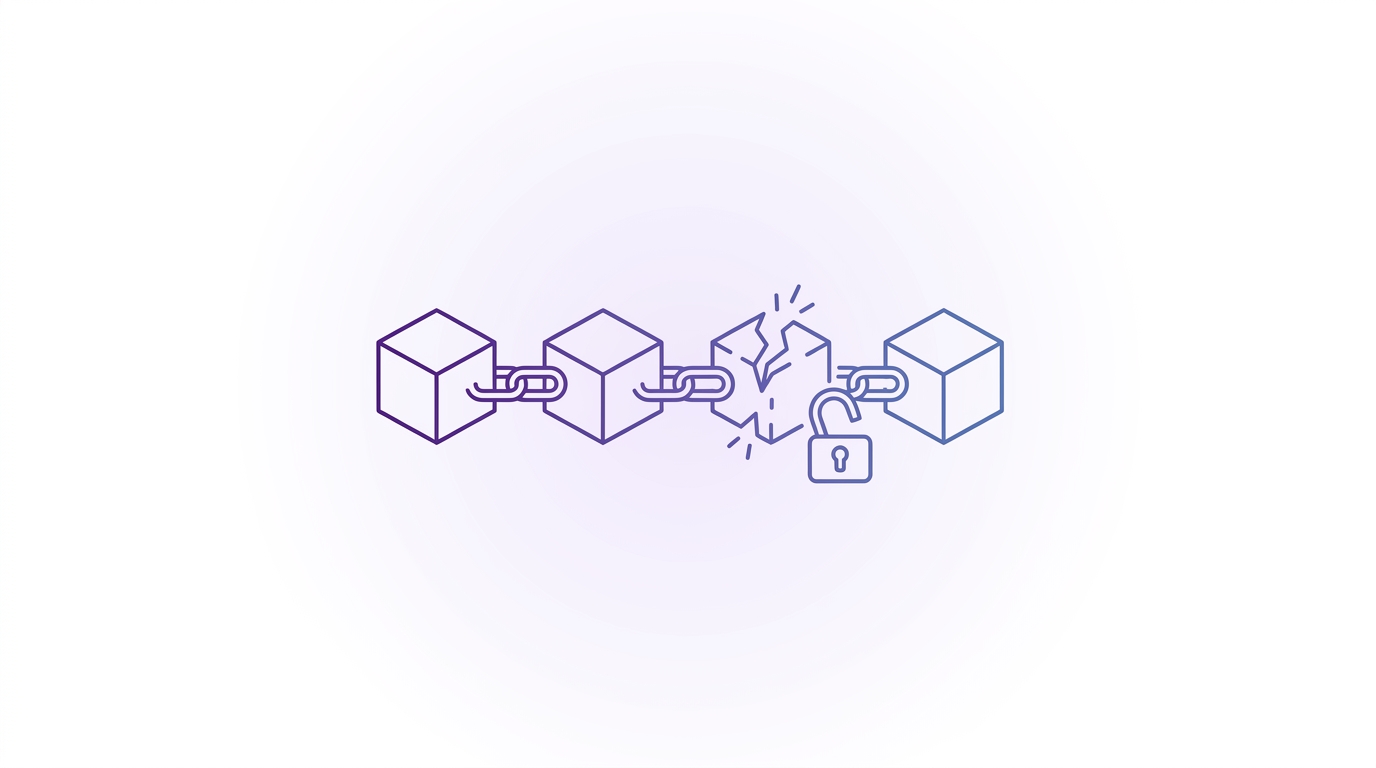
What makes Avici worth studying isn't the size of the loss — it's how ordinary the mistake was. This wasn't unbreakable cryptography being defeated. It was a locked front door next to an unlocked side door, and a single master key where there should have been several.

What actually happened: an admin backdoor

Avici marketed total self-custody — the promise that only your own wallet could ever move your funds. In practice, its program code left a privileged path open. According to security analysts and on-chain data (as reported via Binance News), the attacker ran a tight, repeatable three-step loop:

  1. SubmitSignatures — the attacker called Avici's authorization program and pushed through a crafted bundle of signatures.
  2. AddCollateralAdmin — that let them register themselves as an administrator on individual users' escrow accounts. They didn't need your wallet; they made themselves your account's admin.
  3. WithdrawCollateralAsset — now holding admin rights, they simply withdrew the USDC and USDT collateral backing users' crypto Visa cards.

Repeat across 1,100+ accounts, and you have a seven-figure drain.

Two structural failures made it possible:

  • A broken privileged path. The "add an admin" function should have been impossible for anyone but the legitimate owner to call. It wasn't. The self-custody guarantee existed in the marketing, but not fully in the code.
  • Centralised key control. Both compromised Avici programs shared a single standard Solana account for upgrade privileges — one key that could change the code — instead of a multisig requiring several independent approvals. One key is one point of failure.

Avici acknowledged the issue nearly two hours after the first drainage transaction and said it is working with security partners to secure the contracts. In crypto, two hours is a lifetime.

First, what is a smart contract?

A smart contract is a small program that lives on a blockchain. Instead of a bank's staff deciding "move these funds from A to B", the rules are written in code and executed automatically by the network. When you deposit collateral or borrow against it, you're not trusting a company — you're trusting the code.

That's the promise: no middleman, runs exactly as written. And that's the catch: it runs exactly as written — bugs and backdoors included. There's no manager to call and usually no way to reverse a transaction once it's on-chain. On a blockchain, code is law — so if the code has a flaw, the flaw is law too.

How smart-contract attacks actually work

Most exploits aren't Hollywood "genius breaks the encryption" moments. An attacker finds one honest mistake and uses the system's own rules against it. The recurring patterns:

  • Access-control failures. A sensitive function — "make me an admin", "mint tokens", "upgrade the contract", "withdraw everything" — is left unprotected or guarded by a single key. Whoever reaches it owns the vault. This is exactly what happened to Avici.
  • Reentrancy. The contract sends money out before it updates its books; the attacker calls back in repeatedly and drains it before the ledger catches up. (The 2016 DAO hack.)
  • Flash-loan attacks. Borrow millions with no collateral inside a single transaction, use that firepower to distort prices or governance votes, extract value, repay — all in seconds.
  • Price-oracle manipulation. If a lending system reads its prices from a source an attacker can move, they fake a price and borrow far more than they should.
  • Logic and math errors. Rounding mistakes, missing checks, or an integer that silently overflows can let an attacker take out more than they put in.
  • Bridge exploits. Cross-chain "bridges" hold huge pools of funds and have repeatedly been the industry's single biggest targets.
  • Approval phishing (the user-side attack). No contract bug required — if a malicious app tricks you into signing a token approval, it can drain the tokens you approved, straight from your wallet.

This keeps happening — a short history

Avici joins a long, expensive list. A few landmark cases and what broke:

Year Target Loss (approx.) Root cause
2016 The DAO ~$60M Reentrancy (led to Ethereum's hard fork)
2021 Poly Network ~$610M Access-control flaw across contracts (mostly returned)
2022 Ronin Bridge (Axie) ~$625M Compromised validator keys
2022 Wormhole Bridge ~$320M Signature-verification bug
2022 Beanstalk ~$182M Flash-loan governance takeover
2023 Euler Finance ~$197M Flawed lending logic / flash loan (largely returned)
2023 Curve Finance ~$70M Reentrancy via a compiler bug

Two things stand out. First, the same handful of root causes recur year after year — Avici's "unprotected privileged function + single upgrade key" echoes Poly Network and Ronin almost exactly. Second, the sums are staggering and only sometimes recovered. Unlike a fraudulent card charge, there is no guaranteed way back.

Why "web3 neobank" and "self-custody" deserve a second look

The words are doing a lot of work. A regulated bank has deposit insurance, fraud reversal, and a legal duty to make you whole in many failure cases. A web3 "neobank" is a set of smart contracts holding your collateral. "Self-custody" only means what the code actually enforces — and at Avici, the code didn't enforce it. When the contracts were drained, there was no insurer and no undo button, as $AVICI holders learned when the token halved in a day.

That's not an argument against crypto. It's an argument for understanding exactly what is protecting your money — because the honest answer is often "the quality of some code you've never read, controlled by keys you can't see."

What you should actually do

You can't audit every contract, but you can cut your risk sharply:

  1. Revoke stale token approvals. Use a reputable approval-checker to see and cancel permissions you've granted. Old approvals are a standing door into your wallet — close them.
  2. Use a hardware wallet, and separate your funds. Long-term holdings in cold storage; a small, separate "hot" wallet for day-to-day apps. Never connect your main wallet to a brand-new protocol.
  3. Distrust "self-custody" as a slogan. Ask what enforces it — audited code, and ideally a multisig on upgrade/admin powers. A protocol whose master keys are a single account (like Avici's) is one compromise away from a total drain.
  4. Be sceptical of high yields on new protocols. Outsized returns usually subsidise risk you can't see. The newer and less-audited, the smaller your exposure should be.
  5. Check for audits — but don't treat them as guarantees. Several protocols above were audited. Prefer multiple audits, a bug-bounty programme, and time in market.
  6. Verify addresses and beware fake front-ends. Confirm URLs and contract addresses from official sources; many "hacks" are phishing sites that get you to sign a malicious transaction.
  7. Read what you're signing. If a prompt asks for unlimited spending approval, stop. Grant the minimum, only to apps you trust.
  8. Act fast on incident news. When a protocol you use is reported exploited, withdraw or revoke immediately — the gap between safe and drained is often minutes. Avici took two hours to even acknowledge it.

The bigger lesson

Avici is a crypto story, but the root cause is one that governs cloud infrastructure and SaaS platforms just as much: security is not a feature you add at the end — it's a property of how the whole thing is built. Attackers rarely break the maths. They find the one privileged path someone forgot to lock, or the single key someone forgot to split, and they let the system do the rest.

Whether it's a smart contract holding collateral or a cloud account holding customer data, the discipline is identical: least privilege (no unprotected admin paths), no single points of control (multisig, not one key), verify, don't trust the marketing, and continuous monitoring so you catch the drain in minutes, not hours. The teams that internalise that survive. The ones that treat security as a slogan end up as a line in a table like the one above.

Audit before an attacker does

Do you have money — or a protocol of your own — riding on crypto? Don't wait to become the next line in the table above. Audit your smart contracts now with Securion.ai's smart-contract audit agents — they hunt for exactly this class of flaw: unprotected privileged paths, single-key control, reentrancy, and oracle manipulation. Or book a call with us and let's talk it through. The unlocked door is always cheaper to find than to lose.

FAQ

Can stolen crypto be recovered? Sometimes — a few large hacks were partially or fully returned after negotiation — but there's no guaranteed reversal. Assume "no" and act to prevent loss, not recover it.

Are audited protocols safe? Safer, not safe. Audits reduce risk but several audited protocols were still exploited. Look for multiple audits, a bug bounty, multisig on admin keys, and time in market.

I don't use DeFi — does this affect me? The user-side risks (approval phishing, fake apps, signing malicious transactions) apply to anyone with a wallet, even if you only hold tokens. The wallet-hygiene steps above are for you too.


Written by Saravanakumar Malaichami, Founder of Securion.ai — 20+ years building secure systems, including earlier work in blockchain. Securion helps cloud-native teams find risk, fix it, and prove it. Follow along for security, made simple.

Why Securion?

  • AI-driven threat detection across cloud and SaaS
  • Continuous compliance for SOC 2, ISO 27001, and more
  • Hundreds of security agents — no extra headcount
  • Live audit trail your auditors can self-serve
Try Securion Free
Article Info
Author
Saravanakumar Malaichami, Founder, Securion.ai
Published
29 August 2026
Read time
8 min read
Tags
smart contractsblockchain securitydefiweb3crypto exploitswallet security
securion.ai
  • Solutions
  • Cyber & Cloud Security
  • Frameworks
  • Resources
  • Contact Us
Login
SolutionsCyber & Cloud SecurityFrameworksResourcesContact Us
Login